
925 Sterling Silver vs Silver-Plated Jewelry for Brands
925 Sterling Silver vs Silver-Plated Jewelry for Brands
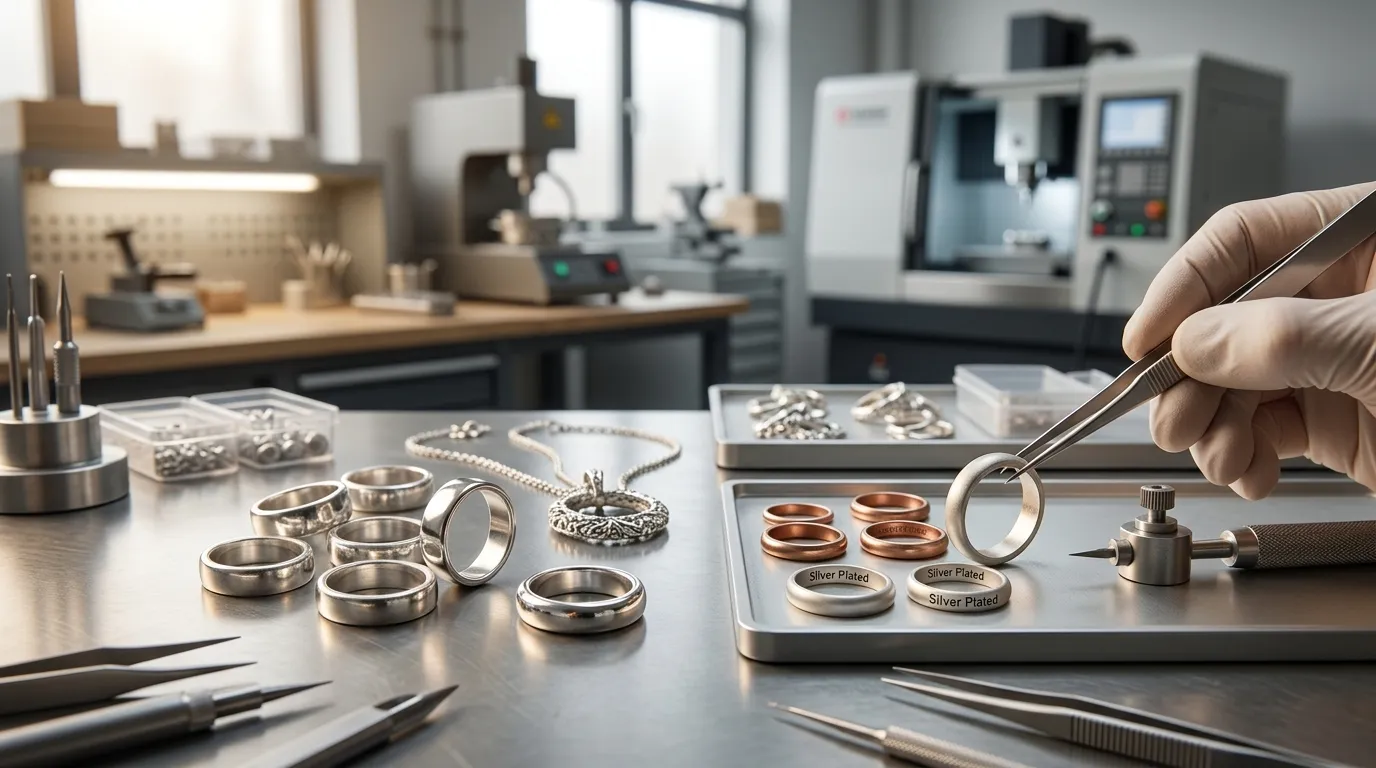
If you are developing a silver jewelry collection, choosing between 925 sterling silver and silver-plated jewelry affects more than the material name on your product page.
It affects the construction of the piece, material cost, finishing process, durability expectations, quality control, product positioning, and ultimately the purchasing experience of your customers.
At our SSJew, we approach this decision from the manufacturing side. Instead of asking which material is simply “better,” we look at what you are trying to achieve: your target price, product design, expected wear, market positioning, finish, and repeat-production requirements.
The important question is not only “What does it look like?”
It is:
“Which construction gives your brand the right balance of material, cost, appearance, durability, and production consistency?”
925 Sterling Silver vs Silver-Plated Jewelry: The Basic Difference
The biggest difference is the material structure.
925 Sterling Silver Is a Silver Alloy
925 sterling silver contains 92.5% pure silver, with the remaining 7.5% made up of other metals used to create a more practical alloy for jewelry.
The number 925 represents 925 parts of silver per 1,000 parts of the alloy.
In the United States, the FTC explains that the terms “silver,” “sterling,” and “sterling silver” describe products containing 92.5% pure silver. Products may also be marked “925,” representing 925 parts silver per thousand.
That means the silver is not simply a surface treatment. It is the primary material throughout the jewelry structure, subject to the applicable construction and component details.
Silver-Plated Jewelry Has a Different Construction
Silver-plated jewelry uses a base material with a layer of silver applied to its surface.
The base can vary depending on the product specification. Brass, copper, stainless steel, and other substrates can be used in plated jewelry.
The important distinction is therefore:
Factor
925 Sterling Silver
Silver-Plated Jewelry
Main structure
92.5% silver alloy
Base metal
Silver content
Throughout the alloy
Surface coating
925 composition
925 parts silver / 1,000
Not equivalent to 925 sterling
Base metal
Silver alloy itself
Depends on specification
Surface finish
Can be polished, plated or treated
Depends on plating system
Material cost
Higher
Usually lower
Weight
Influenced by silver construction
Influenced by base metal
Tarnishing
Possible
Depends on silver layer + base + finish
Product positioning
Often premium
Often cost-focused
Production specification
Material + construction + finish
Base + preparation + plating + finish
The FTC also states that products with a surface layer or coating of silver should be appropriately qualified rather than represented simply as sterling silver. It also requires silver plating or coating to have reasonable durability on significant surfaces.
For you as a buyer, this distinction matters because two pieces can look almost identical in a product photo while having very different material structures and cost positions.
The 92.5% Number Matters — But It Is Not the Whole Specification
A common mistake in jewelry sourcing is treating “925” as the entire material specification.
It is not.
For a production order, you may also need to define:
-
alloy specification
-
component construction
-
product weight target
-
dimensions
-
stone-setting requirements
-
surface finish
-
plating or coating requirements
-
color
-
polishing requirements
-
quality tolerances
-
packaging and labeling requirements
For example, a 925 silver pendant and a 925 silver ring are both sterling silver, but they do not have the same production requirements.
A ring may experience substantially more friction and impact during normal use than an earring or pendant.
So when you compare materials, product construction and intended use should be considered together with material composition.
Cost: Why 925 Sterling Silver Usually Requires a Different Budget
For brands, material choice becomes a commercial decision very quickly.
Silver Content Changes the Material Cost Structure
A sterling silver product contains silver throughout its alloy structure.
A silver-plated product primarily uses its base material for the body and adds silver to the surface.
This means the cost difference is not simply:
“925 is expensive and plating is cheap.”
The actual production cost can be influenced by:
-
metal weight
-
silver market price
-
product dimensions
-
casting or forming complexity
-
material utilization
-
stone setting
-
polishing
-
plating
-
finishing
-
labor
-
packaging
-
order quantity
-
quality requirements
For a custom jewelry project, weight can become especially important.
A small change in product volume can affect the amount of metal required for every unit. When multiplied across a production order, even a small difference can materially affect total material cost.
Lower Material Cost Does Not Automatically Mean Lower Total Cost
Silver-plated construction may reduce the amount of silver used in the product, but that does not mean every plated product is automatically cheaper to manufacture.
The production system may include:
-
Base-metal preparation
-
Surface cleaning
-
Polishing
-
Underlayer or barrier treatment where required
-
Silver plating
-
Rinsing and drying
-
Finishing
-
Inspection
The actual cost should therefore be evaluated from the complete production specification, not only the silver content.
Durability: Look Beyond the Silver Layer
Durability is one of the most misunderstood parts of comparing sterling silver with silver-plated jewelry.
Sterling Silver Can Still Tarnish
925 sterling silver is not completely tarnish-proof.
Silver can react with compounds in the surrounding environment, including sulfur-containing substances, and the surface can darken over time.
This does not mean the product has failed.
For a brand, the more useful question is:
What surface condition do you want the product to maintain, and what care expectations are appropriate for the product?
Depending on your product design, a manufacturer may use polishing, surface treatments, plating, or other finishing processes to achieve a particular appearance.
Silver-Plated Jewelry Depends Heavily on the Plating System
With silver-plated jewelry, the surface layer becomes especially important because the appearance depends on the condition of that layer.
Its performance can be affected by:
-
plating thickness
-
base-metal preparation
-
surface cleanliness
-
adhesion
-
underlayers
-
product geometry
-
friction
-
chemical exposure
-
sweat
-
cosmetics
-
frequency of wear
There is no single universal jewelry rule saying that all silver plating must be X microns thick.
That distinction is important.
ASTM B700, for example, is a specification for electrodeposited silver coatings used primarily for engineering applications. It addresses factors including silver purity, appearance, defects, adhesion, and coating thickness, but it is not a universal decorative-jewelry plating-thickness rule.
So if your supplier gives you a plating thickness specification, you should ask:
-
Is the thickness specified in microns?
-
Where is it measured?
-
Is it a target or minimum?
-
How is it tested?
-
Is the measurement taken from representative areas?
-
Does the specification apply to all production batches?
This is much more useful than simply asking whether a product is “thick plated.”
What You Should Specify Before Ordering Custom Silver Jewelry
If you are sourcing custom silver jewelry, the material name alone is not enough to create a production-ready specification.
1. Define the Base Material
Specify whether the product is:
-
925 sterling silver
-
silver-plated brass
-
silver-plated copper
-
another specified substrate
Do not let “silver jewelry” remain ambiguous in the production specification.
2. Define the Surface Finish
Your specification should identify the intended appearance, such as:
-
bright polished
-
high-polish
-
matte
-
brushed
-
oxidized
-
textured
-
plated finish
The same base material can produce very different visual results depending on surface preparation and finishing.
3. Define Plating Requirements
If plating is part of the design, discuss:
-
plating material
-
target color
-
thickness requirement where applicable
-
plating areas
-
underlayers where applicable
-
finish
-
testing method
-
acceptance criteria
This is where manufacturing communication becomes important.
A vague instruction such as “make it silver plated” leaves too much room for interpretation.
4. Define the Intended Use
Tell your manufacturer whether the product is intended for:
-
everyday wear
-
occasional wear
-
fashion collections
-
seasonal collections
-
premium collections
-
earrings
-
pendants
-
rings
-
bracelets
-
chains
A ring and a pendant do not experience the same level of mechanical contact.
Your material and finishing specification should reflect the product's actual use.
Manufacturing Differences You Should Discuss With Your Supplier
For us at our SSJew, the material decision becomes much more useful when it is connected to the actual manufacturing process.
From CAD to Sample
Before mass production, your design needs to be translated into production-ready dimensions and construction.
For 925 sterling silver, this includes considerations such as:
-
material volume
-
wall thickness
-
structural details
-
stone-setting areas
-
connection points
-
weight
-
finishing areas
For silver-plated products, the manufacturer also needs to consider how the base material will respond to surface preparation and plating.
The result is that material selection should happen before the final production specification is locked, rather than after the design has already been approved.
Sample Approval Is Where You Catch Material Decisions Early
We recommend treating the sample as more than a visual prototype.
For you as a buyer, the sample should help confirm:
-
dimensions
-
weight
-
construction
-
surface appearance
-
color
-
finishing
-
stone setting
-
functional details
If the sample is approved without a sufficiently detailed specification, the production team may have too much room to interpret the approved appearance differently during bulk production.
Sample-to-Bulk Consistency Matters More Than the Material Name
A supplier can tell you:
“This is 925 sterling silver.”
That answers only one part of your procurement question.
You also need to know whether the approved sample can be reproduced consistently.
What Should Stay Consistent?
For a custom jewelry production order, you may want to compare:
Production Factor
What You Should Check
Material
Specified alloy / substrate
Weight
Within agreed tolerance
Dimensions
Consistent with approved sample
Surface
Same finish and texture
Color
Consistent between batches
Plating
Agreed specification
Stones
Correct type, size and setting
Construction
Same structural details
Packaging
Matches approved specification
At our SSJew, this is why we treat the approved sample as a production reference rather than simply a photography sample.
The exact QC method, tolerances, and testing records should be defined according to your product requirements.
Evidence SSJew should provide on this page: actual sample-to-bulk comparison photos, production QC records, material verification examples, and plating inspection records. These should be added only when SSJew can provide genuine production evidence.
925 Sterling Silver vs Silver-Plated Jewelry: Which Should Your Brand Choose?
There is no universal winner.
The right choice depends on your product strategy.
Your Priority
More Suitable Starting Point
Higher silver content
925 sterling silver
Premium material positioning
925 sterling silver
Lower silver consumption
Silver-plated construction
Lower material-cost target
Silver-plated construction
Product requires a base-metal structure
Silver-plated
Collection positioned around sterling silver
925 sterling silver
Fashion-focused appearance at a controlled cost
Silver-plated may be worth evaluating
High-contact product
Evaluate construction and finish carefully
Long-term repeat collection
Specify material and finishing requirements precisely
The key point is that material choice should follow your product positioning and target economics, not simply the assumption that one construction is always better.
What We Would Ask You Before Quoting a Custom Silver Jewelry Project
When you contact our SSJew, the most useful information is not simply:
“I need 925 silver jewelry.”
We would want to understand the product you are actually trying to develop.
Product Specification
You can prepare:
-
design files or reference images
-
jewelry category
-
target material
-
approximate dimensions
-
target weight if available
-
stone specifications
-
finish
-
plating requirements
-
target market
-
expected use
-
packaging requirements
Commercial Requirements
You should also communicate:
-
target quantity
-
number of SKUs
-
sampling requirements
-
target price range
-
expected reorder potential
-
launch timing
The more clearly these requirements are defined, the easier it becomes to evaluate whether 925 sterling silver or a silver-plated construction is appropriate for your collection.
A Practical B2B Decision Checklist
Before approving your next silver jewelry order, use this checklist:
Material
-
Is the product 925 sterling silver or silver-plated?
-
Is the base material clearly specified?
-
Is the material composition documented?
-
Is the product labeling consistent with the actual construction?
Design
-
Are dimensions confirmed?
-
Is the weight target clear?
-
Are stone specifications defined?
-
Are structural details production-ready?
Finishing
-
Is the surface finish specified?
-
Is plating required?
-
Is plating thickness specified where appropriate?
-
Is the target color clearly defined?
Production
-
Has a physical sample been approved?
-
Are production tolerances defined?
-
Is there a QC inspection process?
-
Can the approved sample be used as the bulk-production reference?
Repeat Orders
-
Can the manufacturer retain the approved specifications?
-
Can future batches be compared with the approved sample?
-
Are material and finishing requirements documented for reorders?
This checklist is more useful than choosing a material based only on the words “sterling silver” or “silver plated.”