
How to Prevent Stone Dropping in Mass Production Jewelry: Quality Control Guide for Jewelry Brands
How to Prevent Stone Dropping in Mass Production Jewelry: Quality Control Guide for Jewelry Brands
Why Stone Dropping Is One of the Biggest Risks in Mass Production Jewelry
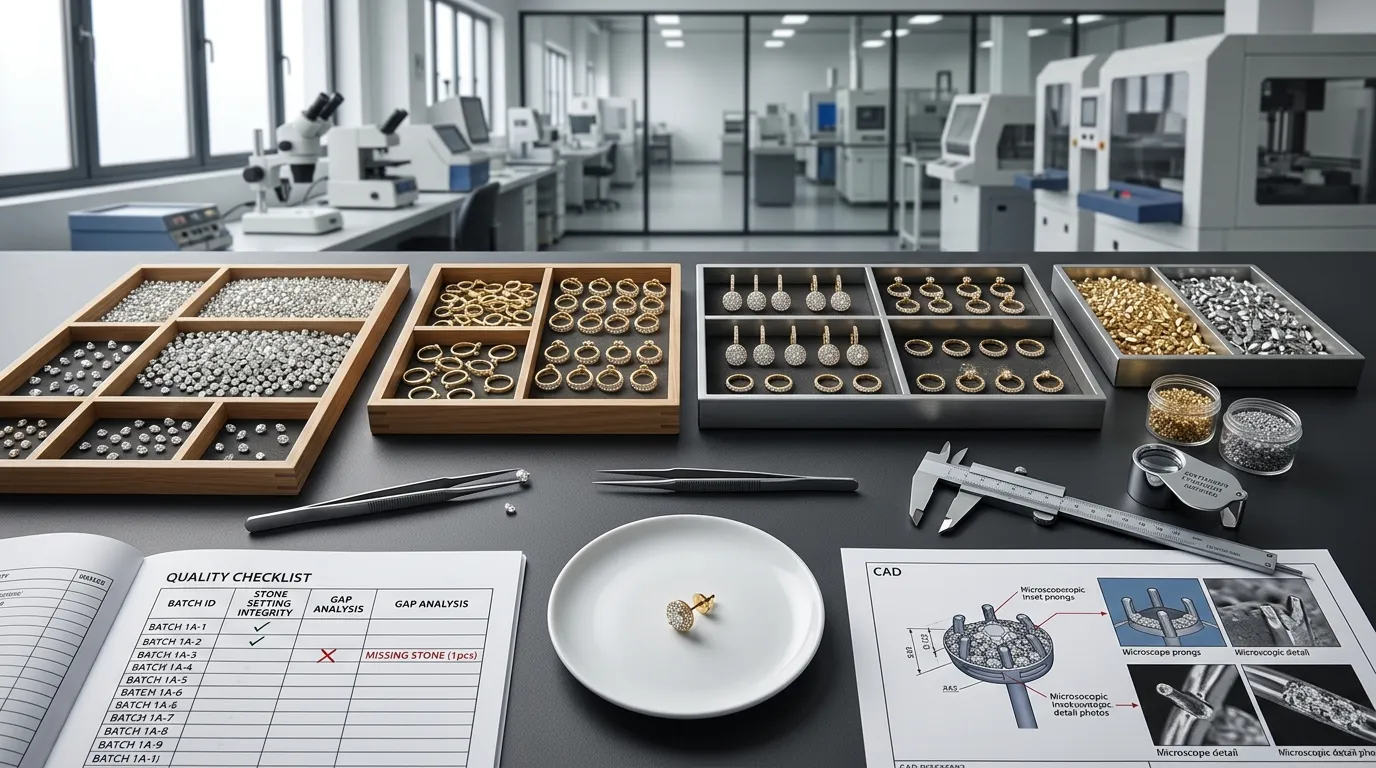
When you develop jewelry collections, one of your biggest concerns is not only whether the product looks beautiful in the sample stage.
The real challenge starts when thousands of pieces are produced.
A design that looks perfect in a prototype may experience problems during bulk production, such as:
-
Loose stones after repeated wear
-
Missing stones during transportation
-
Uneven stone setting quality between batches
-
Customer complaints and return costs
For jewelry brands, stone dropping is more than a manufacturing defect.
It can affect:
-
Brand reputation
-
Customer trust
-
After-sales costs
-
Repeat purchase decisions
At SSJew, we understand that mass production requires more than creating attractive jewelry. It requires a controlled manufacturing system that ensures every piece maintains the same quality standard.
Why Do Stones Fall Out of Jewelry During Mass Production?
1. Incorrect Jewelry Design Structure
Many stone-related problems start before production begins.
A design may look attractive but still create manufacturing risks.
Common design issues include:
-
Insufficient stone support structure
-
Weak prong design
-
Incorrect stone seat dimensions
-
Too thin metal around stone positions
-
Poor tolerance control
For example, a pavé ring with extremely small metal supports requires higher manufacturing precision than a simple bezel setting.
A professional manufacturer should evaluate:
-
Is the design suitable for mass production?
-
Can the stone setting structure maintain durability?
-
Will polishing reduce the strength of the setting?
At SSJew, we review manufacturing feasibility during the development stage to help brands avoid production problems before they happen.
"During our design review process, we identify potential production risks before sampling, helping customers optimize designs before mass production."
2. Poor Stone Setting Technique
Stone setting is one of the most important processes affecting jewelry durability.
Different jewelry styles require different setting methods.
Common setting methods include:
Prong Setting
Suitable for:
-
Rings
-
Earrings
-
Pendant designs
Potential risks:
-
Uneven prong thickness
-
Loose claws
-
Incorrect stone positioning
Pavé Setting
Popular for luxury and fashion jewelry.
Challenges:
-
Extremely small stones
-
High precision requirements
-
Consistent spacing between stones
Bezel Setting
Advantages:
-
Strong stone protection
-
Better durability for daily wear
A skilled setter must control:
-
Stone alignment
-
Setting pressure
-
Metal support
-
Final appearance
At SSJew, our production team pays special attention to craftsmanship-intensive products, including complex designs requiring precise stone placement.
How Jewelry Manufacturers Control Stone Security During Mass Production
1. CAD Optimization Before Production
A reliable manufacturing process starts before the first piece is produced.
CAD engineering helps control:
-
Stone dimensions
-
Setting positions
-
Metal thickness
-
Structural strength
Before mass production, manufacturers should confirm:
✅ Stone measurements
✅ Setting structure
✅ Production feasibility
✅ Durability requirements
A manufacturing-ready CAD design reduces the risk of:
-
Stone movement
-
Cracked settings
-
Production inconsistency
At SSJew, we combine design understanding with manufacturing experience to help brands transform creative concepts into production-ready jewelry.
2. Prototype Testing Before Bulk Orders
A common mistake among buyers is moving directly from design approval to mass production.
A prototype allows you to verify:
-
Stone security
-
Wearing comfort
-
Product appearance
-
Manufacturing accuracy
Before producing hundreds or thousands of pieces, testing one approved sample can prevent expensive production mistakes.
At SSJew, we recommend brands complete sample approval before entering bulk production.
"Our standard process includes prototype evaluation before bulk manufacturing to ensure design, craftsmanship, and quality expectations are aligned."
3. Multi-Stage Quality Control Inspection
Stone security cannot be checked only at the final stage.
Professional jewelry production requires inspections throughout the manufacturing process.
Typical QC checkpoints include:
After Casting
Check:
-
Setting structure
-
Metal strength
-
Surface defects
After Stone Setting
Check:
-
Stone tightness
-
Stone alignment
-
Setting consistency
Final Inspection
Check:
-
Overall appearance
-
Stone security
-
Packaging condition
At SSJew, our quality control process focuses on identifying problems before products reach your customers.
"Each production batch follows our quality inspection standards before shipment."
How Brands Can Reduce Stone Dropping Risks Before Production
Choose Manufacturing Partners With Production Experience
Not every jewelry supplier has the same manufacturing capability.
A reliable partner should understand:
-
Jewelry engineering
-
Material characteristics
-
Setting techniques
-
Production consistency
For example, complex products such as:
-
Cuban chains with stone details
-
Custom rings
-
Pavé jewelry
-
Multi-component designs
require stronger manufacturing experience.
At SSJew, we have 13 years of jewelry manufacturing experience, especially in 925 silver jewelry production and complex craftsmanship.
Our 1,850㎡ facility and 160,000+ monthly production capacity allow us to support brands requiring consistent bulk production.
Provide Complete Product Specifications
Clear communication reduces production risks.
Before production, brands should confirm:
-
Jewelry dimensions
-
Material specifications
-
Stone type and size
-
Surface finishing requirements
-
Quality expectations
The clearer the specification, the fewer unexpected issues appear during production.
How SSJew Helps Brands Maintain Stone Quality in Bulk Jewelry Production
When you work with SSJew, you are not only choosing a jewelry supplier.
You are choosing a manufacturing partner focused on reducing production risks.
Our manufacturing advantages include:
13 Years Jewelry Manufacturing Experience
We understand the challenges of transforming designs into stable mass production.
925 Silver Jewelry Expertise
Silver jewelry requires precise control because finishing, plating, and structural strength directly influence product durability.
Complex Craftsmanship Capability
Our experience includes:
-
Cuban chains
-
Customized link structures
-
Detailed polishing
-
Complex finishing processes
Global Market Experience
We have supplied customers across:
🔴 120+ countries
helping us understand different market quality expectations.
Production Capability
Our facility:
-
1,850㎡ manufacturing space
-
160,000+ pieces monthly capacity
supports both growing brands and established buyers.