
Lead and Cadmium Limits in Jewelry: What Importers Need to Check
Lead and Cadmium Limits in Jewelry: What Importers Need to Check
Why Lead and Cadmium Compliance Matters When You Import Jewelry
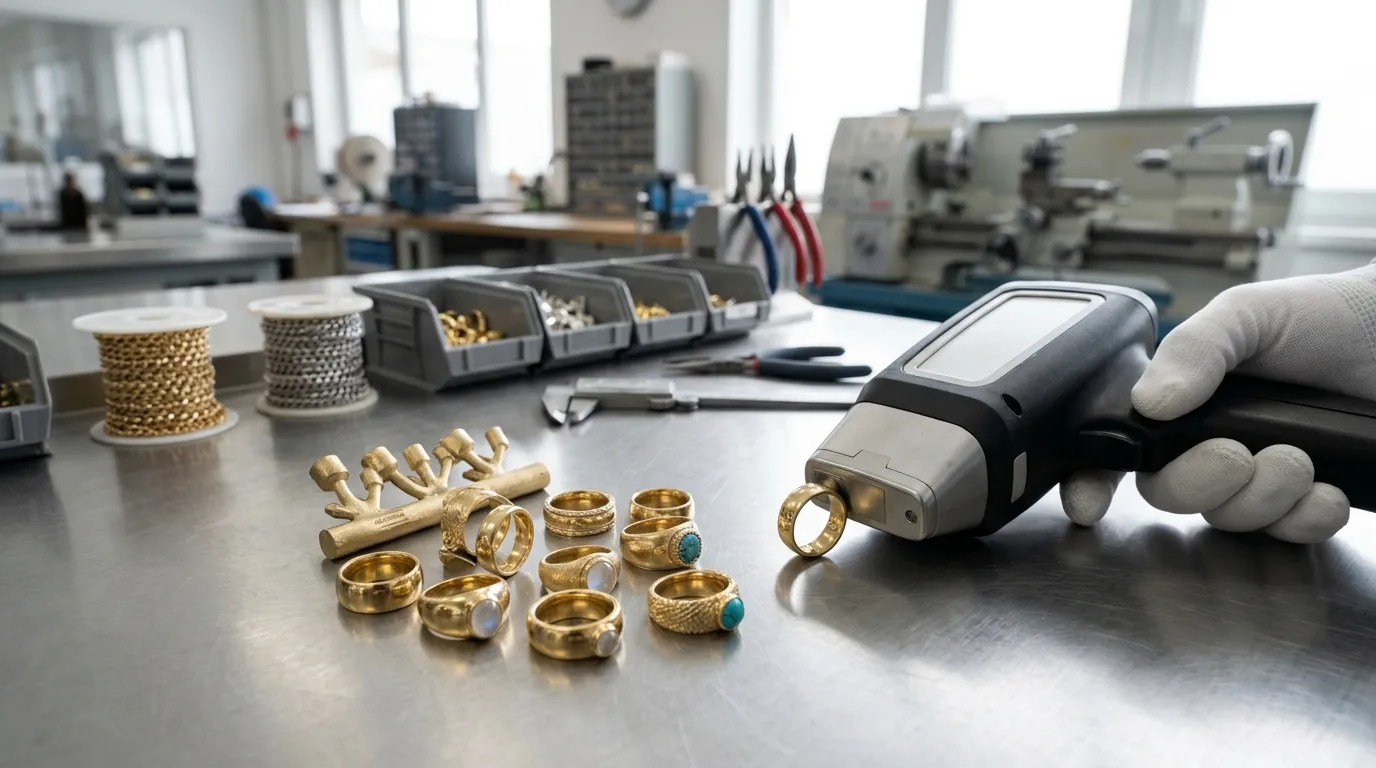
When you source jewelry internationally, checking the material, plating, dimensions, and unit price is only part of the procurement process.
You also need to know whether the finished jewelry can legally enter and be sold in your target market.
Lead and cadmium are two materials that deserve particular attention because they can occur in metal alloys, components, coatings, and certain manufacturing materials. If a product fails a required chemical test after production, the problem can be much more expensive than the original testing cost.
You may need to:
-
Hold or reject an incoming shipment
-
Rework or scrap finished jewelry
-
Repeat laboratory testing
-
Delay your product launch
-
Replace non-compliant components
-
Deal with marketplace or customs issues
-
Investigate the material source with your supplier
For you as an importer, the practical question is therefore not simply:
“Does this jewelry contain lead or cadmium?”
The better question is:
“Does every relevant component meet the requirements of the market where I will sell it?”
That distinction matters because regulations can apply to individual components rather than only the finished jewelry as a whole.
For example, EU REACH restricts lead in individual parts of jewelry at 0.05% by weight (500 ppm) or higher. The regulation specifically includes materials and individual components used to make jewelry.
Lead and Cadmium Jewelry Limits You Should Know
There is no single worldwide “safe jewelry limit.”
The applicable requirement depends on:
-
Your destination market
-
Whether the jewelry is for adults or children
-
The material and component involved
-
The applicable regulation or standard
-
How the product is intended to be used
For procurement purposes, these are some of the most important numbers to understand.
EU REACH Lead Limit for Jewelry
Under EU REACH Annex XVII, jewelry articles and individual jewelry parts cannot be placed on the EU market when the concentration of lead is equal to or greater than 0.05% by weight.
That is:
Substance
EU REACH jewelry limit
Equivalent
Lead
< 0.05%
< 500 ppm
The restriction covers jewelry and imitation jewelry, including rings, necklaces, bracelets, piercing jewelry, watches and wrist-wear, brooches and cufflinks. It also applies to individual materials and components used in jewelry-making.
This is important for you as an importer: testing only the finished necklace may not be enough to understand where the compliance risk comes from. Individual components such as clasps, charms, chains or metal findings may need to be considered separately.
EU REACH Cadmium Limit for Jewelry
EU REACH Annex XVII Entry 23 restricts cadmium in:
-
Metal beads used for jewelry making
-
Other metal components for jewelry making
-
Metal parts of jewelry and imitation jewelry
-
Hair accessories containing relevant metal parts
The concentration limit is:
Substance
EU REACH jewelry limit
Equivalent
Cadmium
< 0.01%
< 100 ppm
The restriction applies to products including bracelets, necklaces, rings, piercing jewelry, watches, wrist-wear, brooches and cufflinks.
For you, this means that “the main metal is compliant” is not enough information.
A compliant stainless steel or brass body can still require attention to the individual components used in the finished product.
What Are the US Requirements for Lead and Cadmium in Jewelry?
The US market needs to be approached differently from the EU.
There is no single mandatory federal regulation specifically covering all adult jewelry. The US Consumer Product Safety Commission points to ASTM F2999 for adult jewelry and ASTM F2923 for children's jewelry as industry consensus standards.
However, children's jewelry is subject to additional requirements.
Lead Limit for Children's Products
For children's products covered by the federal total lead content requirement, accessible component parts must not contain more than:
100 ppm total lead
That equals:
0.01% by weight
The CPSC states that children's products containing more than 100 ppm lead in an accessible component are subject to the federal restriction.
This is significantly lower than the EU REACH jewelry threshold of 500 ppm.
Market / Product
Lead Limit
EU jewelry under REACH
< 500 ppm
US children's products
≤ 100 ppm
US children's product surface coating
≤ 90 ppm
The US surface coating requirement is separate from total lead content. Children's products cannot have paint or similar surface coatings containing more than 90 ppm lead.
This is why you should never tell your manufacturer simply “make it US compliant.”
You need to specify:
-
Target market
-
Product category
-
Intended age group
-
Applicable standard/regulation
-
Required testing
Why Children's Jewelry Requires More Attention
If you are developing children's jewelry, the compliance risk is different from ordinary adult jewelry.
Children's jewelry can involve:
-
Mouthing
-
Swallowing
-
Skin contact
-
Small detachable components
-
Metal components
-
Surface coatings
-
Magnets
-
Nickel sensitization
The CPSC's children's jewelry work specifically identifies cadmium exposure through mouthing or swallowing small metal jewelry components as a potential hazard addressed by ASTM F2923.
For a children's collection, I would therefore recommend that you establish the compliance requirements before sampling, rather than waiting until mass production is complete.
That allows us to select materials and components around the required specification from the beginning.
Which Jewelry Components Should Importers Check?
One of the most common procurement mistakes is checking only the main metal.
A jewelry product is usually made from multiple components.
For example, a necklace could contain:
-
Main pendant
-
Chain
-
Jump rings
-
Clasp
-
Bail
-
Decorative charms
-
Stone setting
-
Soldered joints
-
Plating
-
Enamel
-
Other decorative components
Main Metal
Start with the base material.
Common jewelry materials include:
-
925 sterling silver
-
Brass
-
Stainless steel
-
Copper
-
Gold alloys
-
Silver alloys
You should know the actual alloy specification rather than relying only on a product name such as “brass” or “silver color.”
For example, if you are ordering brass jewelry, ask what alloy is being used and whether the material has previously been tested for your target market.
Clasps, Chains and Small Findings
Small components are easy to overlook because they may represent only a small percentage of the finished product.
But they are still part of the product.
A necklace might pass an overall material review while a specific metal finding creates a compliance problem.
This is why our approach at SSJew is to consider the material system of the product, rather than looking only at the visible main body.
Plating and Surface Finishes
Gold plating, silver plating, rhodium plating and other finishes should also be considered as part of your compliance review.
For example, you may order:
Brass + 18K gold plating
But the compliance question should not stop at:
“Is the base metal brass?”
You should also know:
-
What alloy is underneath?
-
What plating system is used?
-
Are there intermediate layers?
-
What materials are used during plating?
-
Does the finished product meet the required chemical specification?
For you as a buyer, this information is much more useful than simply receiving a statement such as “lead free.”
Lead-Free and Cadmium-Free Are Not the Same as Compliance
This is an important distinction when communicating with suppliers.
A supplier may tell you:
“Our jewelry is lead-free.”
That statement alone does not tell you:
-
Which regulation was used
-
Which test method was used
-
Which component was tested
-
When the test was performed
-
Whether the test was performed on the same material
-
Whether the result applies to the finished product
The same applies to “cadmium-free.”
For procurement, I recommend asking for test evidence and specifications, not only verbal claims.
A useful supplier request should look more like:
“Please provide the latest lead and cadmium test report for the same material and component specification used in this production order, and confirm the applicable market standard.”
That gives you something you can actually use for supplier evaluation.
What Should a Jewelry Importer Ask the Manufacturer?
Before placing a bulk order, I recommend asking your manufacturer these questions.
1. What Is the Base Metal?
Ask for the specific material or alloy rather than a generic description.
For example:
-
925 sterling silver
-
Brass alloy specification
-
Stainless steel grade
-
Gold alloy specification
2. Which Components Are Included?
Ask whether the test covers:
-
Main jewelry body
-
Chain
-
Clasp
-
Findings
-
Charms
-
Decorative components
-
Other metal parts
This is particularly important for multi-component jewelry.
3. Which Market Standard Was Used?
Tell your manufacturer where you intend to sell.
For example:
EU → REACH
US children's jewelry → applicable CPSC requirements + relevant ASTM standard
This allows the manufacturer to determine the appropriate compliance pathway instead of assuming one standard applies everywhere.
Can You Provide a Recent Test Report?
A useful report should identify information such as:
-
Product/sample description
-
Material
-
Test items
-
Test results
-
Testing laboratory
-
Test date
-
Applicable test method or standard
If the report is several years old or describes a completely different product, you should not automatically assume that it proves compliance for your current order.
How We Manage Lead and Cadmium Risk at SSJew
At SSJew, we treat chemical compliance as part of the production process rather than something to check only after manufacturing.
When you send us a jewelry project, we first need to understand where you plan to sell it and what product category you are developing.
For example:
-
EU jewelry
-
US adult jewelry
-
US children's jewelry
-
Retail jewelry
-
Private-label collections
-
Wholesale jewelry
These requirements can be different.
We Start With Your Target Market
When you tell us your destination market, we can align the material and testing requirements with the project specification.
This is especially important when you are developing a collection for multiple markets.
Instead of producing one version and discovering later that a component needs to be changed, we can consider the compliance requirement during material selection and sampling.
We Check the Material and Components
For custom jewelry, we do not look only at the main metal.
We also consider the components that go into the finished piece.
That matters when your design contains:
-
Multiple metal components
-
Brass parts
-
Small findings
-
Decorative metal elements
-
Plating
-
Enamel
-
Complex assemblies
Our goal is to reduce the chance that a component overlooked during development becomes a problem during final testing.
We Can Arrange Testing for Your Target Market
If your project requires laboratory testing, we can work with the applicable testing requirements for the target market and product category.
The important point for you is that the testing requirement should be established before mass production, not after the shipment has already been completed.
That gives you a better opportunity to correct:
-
Material selection
-
Component specifications
-
Plating systems
-
Suppliers
-
Production samples
before the issue becomes an expensive bulk-order problem.
A Practical Lead and Cadmium Compliance Checklist for Importers
Before approving your jewelry order, use this checklist.
Material Checklist
-
Base metal identified
-
Alloy specification confirmed
-
Components identified
-
Plating system confirmed
-
Decorative materials identified
-
Children's jewelry status confirmed, if applicable
Regulatory Checklist
-
Target country confirmed
-
EU REACH requirements checked, if applicable
-
US CPSC requirements checked, if applicable
-
Children's product requirements checked, if applicable
-
Relevant ASTM standard identified
-
California requirements considered if California sales are planned
H3: Testing Checklist
-
Lead testing requirement confirmed
-
Cadmium testing requirement confirmed
-
Correct component/sample tested
-
Test report identifies the material
-
Laboratory information available
-
Test results reviewed before bulk production
Lead and Cadmium Limits: EU vs US at a Glance
For quick procurement reference:
Requirement
EU Jewelry
US Children's Products
Lead
< 500 ppm
≤ 100 ppm
Cadmium in jewelry
< 100 ppm
Requirements depend on applicable product standards/regulations
Lead in children's surface coatings
Market-specific
≤ 90 ppm
Adult jewelry federal rule
REACH applies in EU
No single mandatory federal jewelry-specific requirement
Children's jewelry
REACH + applicable requirements
CPSC children's product requirements + applicable standards
The key takeaway is that you should not use one test limit for every market.
The same jewelry design may need different compliance considerations depending on where you intend to sell it.
For California, Proposition 65 creates an additional layer because it regulates exposure to listed chemicals through warning requirements and safe-harbor levels. For example, California OEHHA currently lists a cadmium oral MADL of 4.1 μg/day. This is an exposure-based value, not a simple jewelry material concentration limit, so it should not be directly compared with the EU's 100 ppm jewelry limit.
What Importers Should Do Before Placing a Jewelry Order
You do not need to become a chemical compliance specialist to source jewelry safely.
But you do need to establish the compliance requirements before production.
A practical workflow is:
Step 1 — Define Your Sales Market
Tell your manufacturer:
“We will sell this collection in the EU.”
or:
“This is children's jewelry for the US market.”
This determines which requirements need to be considered.
Step 2 — Define the Product
Confirm:
-
Adult or children's jewelry
-
Material
-
Components
-
Plating
-
Intended use
-
Product category
Step 3 — Confirm the Compliance Requirements
Your manufacturer should identify the applicable requirements and testing needs before mass production.
Step 4 — Test the Correct Sample
The sample sent for testing should represent the actual production material and component specification.
Step 5 — Keep the Documentation
Keep:
-
Material specifications
-
Test reports
-
Production specifications
-
Supplier information
-
Product identification
-
Batch/order records
This documentation becomes valuable when you need to answer questions from retailers, marketplaces, customs, or your own customers.