
What Jewelry Testing Certificates Should Brands Request From Manufacturers?
What Jewelry Testing Certificates Should Brands Request From Manufacturers?
Why Jewelry Testing Certificates Matter When Choosing a Manufacturer
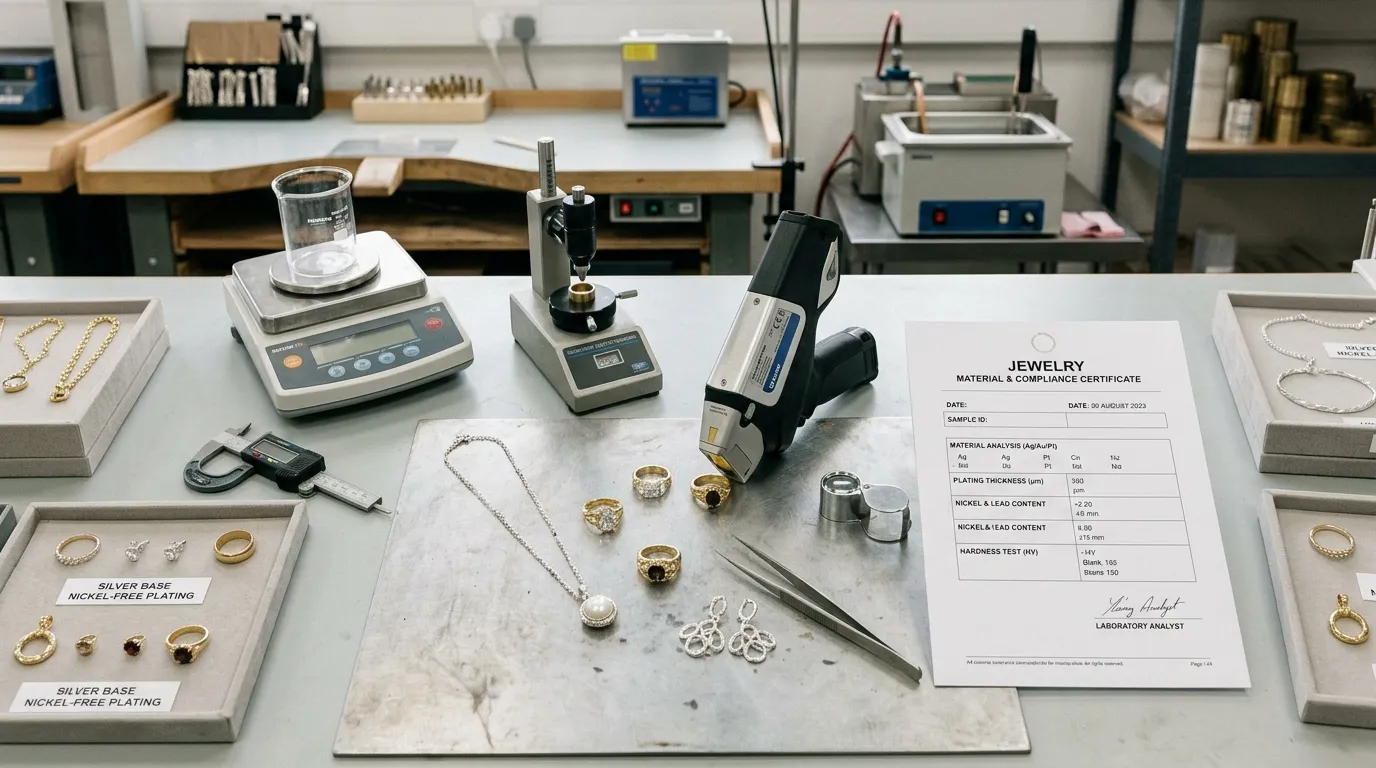
When you source jewelry from a manufacturer, you are not only buying products.
You are building a product that represents your brand.
A supplier’s material quality, production standards, and testing process directly influence:
-
customer trust
-
product reviews
-
repeat purchases
-
market acceptance
For growing jewelry brands, certification is not simply paperwork.
It is evidence that your manufacturer follows controlled production standards.
At SSJEW, we believe reliable manufacturing starts with transparency. The right testing process helps brands reduce sourcing risks before products reach their customers.
What Are Jewelry Testing Certificates?
Understanding What Jewelry Certificates Actually Verify
Jewelry testing certificates are documents issued by professional testing organizations to verify product materials and quality.
Depending on the product category, testing may confirm:
-
Metal purity
-
Material composition
-
Plating performance
-
Gemstone authenticity
-
Safety compliance
-
Product quality requirements
For brands purchasing wholesale or OEM jewelry, certificates provide measurable proof instead of relying only on supplier claims.
What Jewelry Testing Certificates Should Brands Request From Manufacturers?
1. Metal Purity Testing Certificate
Why it matters
For silver and gold jewelry brands, metal authenticity is one of the most important concerns.
Examples:
Sterling Silver Jewelry
925 sterling silver means:
-
92.5% pure silver
-
7.5% alloy metals
Gold Jewelry
Common standards include:
-
18K gold = 75% pure gold
-
14K gold = 58.5% pure gold
A metal testing report helps verify that the jewelry matches the material specification promised by the manufacturer.
2. Nickel-Free / Material Safety Testing
For brands selling internationally, skin safety has become increasingly important.
Many customers are concerned about:
-
skin irritation
-
allergic reactions
-
long-term wearing comfort
Nickel-related regulations are especially important for jewelry sold in markets such as:
-
European Union
-
United Kingdom
-
North America
A reliable manufacturer should understand:
-
material composition
-
restricted substances
-
market requirements
At SSJEW, we help brands develop jewelry collections with material requirements based on their target markets.
3. Plating Quality Testing
For gold-plated and fashion jewelry brands, plating quality directly affects customer experience.
Important factors include:
-
plating thickness
-
color consistency
-
durability
-
surface adhesion
A professional manufacturer should clearly define:
-
plating material
-
plating thickness
-
finishing standard
4. Gemstone Testing and Verification
For jewelry containing stones, brands should understand:
-
stone type
-
stone quality
-
origin information (when applicable)
Testing may verify:
-
gemstone authenticity
-
stone characteristics
-
treatment information
This is especially important for:
-
moissanite jewelry
-
CZ jewelry
-
diamond jewelry
-
colored gemstone collections
5. Quality Inspection Reports
Certification is not only about materials.
Production consistency is equally important.
Before shipment, brands should request quality inspection records covering:
-
appearance inspection
-
size measurement
-
stone setting security
-
finishing quality
-
packaging accuracy
At SSJEW, quality control is integrated throughout production:
-
Material inspection
-
Production monitoring
-
Final inspection
-
Shipment approval
Why Certified Manufacturing Helps Jewelry Brands Reduce Business Risks
Reduce Customer Complaints and Returns
Without proper testing, brands may face:
-
incorrect material claims
-
quality complaints
-
product returns
-
damaged reputation
Certification provides confidence before products enter the market.
Build Customer Trust Through Transparency
Modern customers increasingly care about:
“What materials are used?”
“How was this product made?”
“Is it safe for daily wear?”
Brands that provide clear material information can build stronger relationships with customers.
Improve International Market Readiness
For brands selling globally, documentation helps support:
-
retailer partnerships
-
marketplace requirements
-
import processes
-
customer confidence
How SSJEW Supports Certified Jewelry Manufacturing
At SSJEW, we understand that brands need more than jewelry production.
They need a manufacturing partner that can provide:
-
reliable materials
-
consistent craftsmanship
-
quality documentation
-
transparent communication
Our manufacturing support includes:
-
Custom jewelry manufacturing
-
OEM and private label production
-
925 silver jewelry production
-
Gold jewelry manufacturing
-
Quality inspection
-
Material verification support
With:
-
13 years jewelry manufacturing experience
-
1,850㎡ production facility
-
160,000+ monthly production capacity
-
Customers in 120+ countries
-
98.71% customer satisfaction rate
We help brands create jewelry collections with confidence from development to bulk production.
How to Choose a Jewelry Manufacturer With Reliable Testing Standards
Questions Brands Should Ask Before Cooperation
Before selecting a manufacturer, you should ask:
Material Questions
-
Can you provide metal testing reports?
-
What materials do you use?
-
Are products compliant with target markets?
Production Questions
-
How do you control quality during mass production?
-
Do you inspect products before shipment?
Business Questions
-
Can you support OEM customization?
-
Can you handle both small orders and large production?
A professional manufacturer should welcome these questions because transparency builds long-term partnerships.