
How Jewelry Material Choices Affect Manufacturing Costs
How Jewelry Material Choices Affect Manufacturing Costs
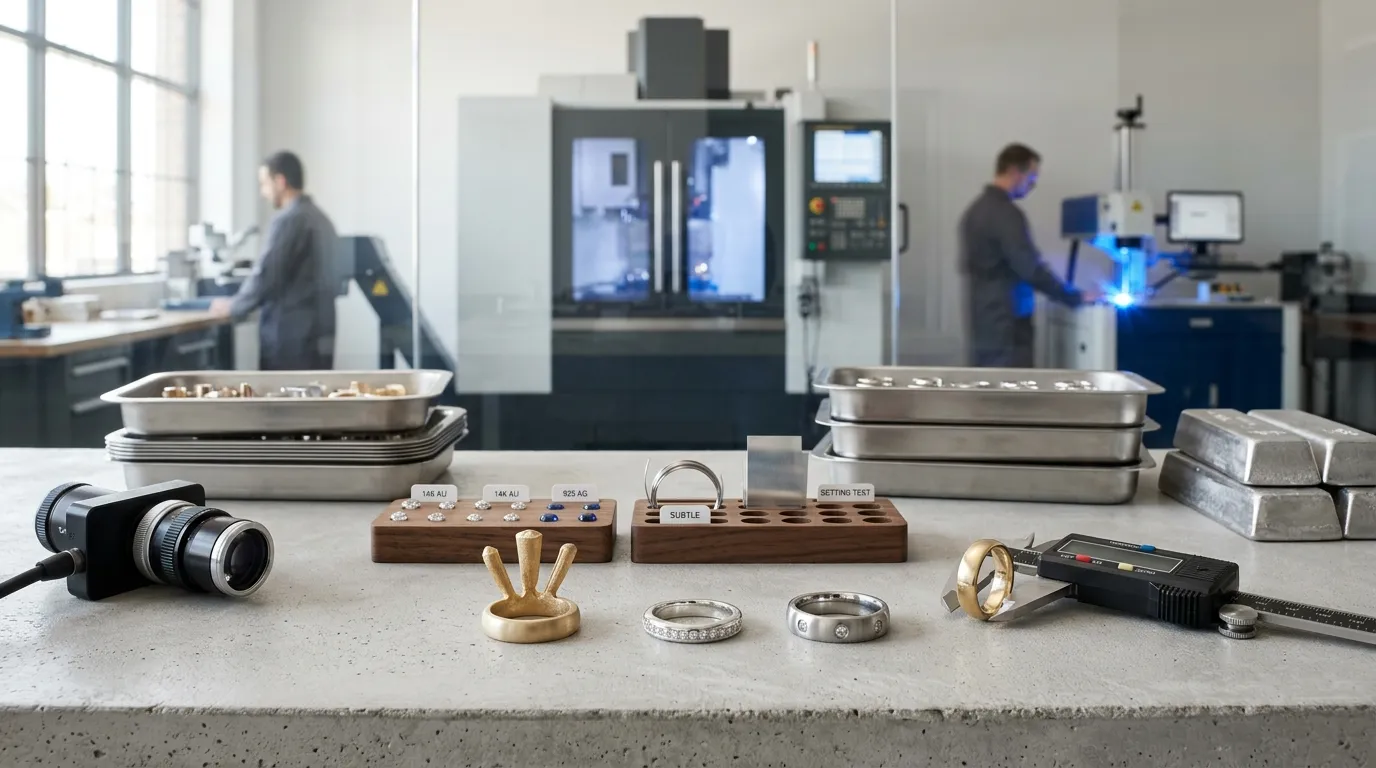
When you develop a jewelry collection, choosing the material is not simply a question of appearance or raw-material price.
The material you select can affect finished weight, production processes, polishing, plating, stone setting, material yield, quality control and your final cost per piece.
At our SSJew, we look at material selection from a manufacturing perspective: how the material works with your design, what production route it requires, and how the specification can be reproduced when you reorder.
Why Does Material Choice Matter to Your Jewelry Cost?
Material Cost Is Only the Starting Point
The raw material is one part of your manufacturing cost.
Your final cost can also include:
-
Material and finished weight
-
Casting, stamping or CNC
-
Polishing and surface preparation
-
Stone setting
-
Plating or PVD
-
Assembly
-
Material loss and production yield
-
Quality inspection
-
Packaging
This means changing from brass to 925 sterling silver, for example, does not simply mean replacing one material price with another.
The material can change the entire manufacturing calculation.
The Same Design Can Have Different Manufacturing Costs
Imagine you have the same 10 g pendant design.
If it is produced in brass, 925 sterling silver or gold, the raw-material value is different. However, the production route, finishing requirements and quality-control considerations can also change.
For B2B sourcing, you should therefore compare:
Material + Finished Weight + Production Route + Finish + Quantity
rather than comparing material names alone.
How Do Different Jewelry Materials Affect Manufacturing Costs?
925 Sterling Silver
925 sterling silver contains 92.5% pure silver, with the remainder generally consisting of other metals used to create the alloy. The FTC recognizes “sterling” or “sterling silver” as meaning at least 925 parts per thousand pure silver.
For you as a buyer, the important cost variables include silver market price, finished weight, casting requirements, polishing, stone setting and final finishing.
Silver can also be used with finishes such as rhodium or gold plating, which introduces another layer of production specifications.
Our SSJew manufacturing process includes in-house silver casting/forming, stone setting, plating and final inspection, allowing the material and finishing requirements to be considered together.
-
Average 925 Silver Material Loss: ≤5%
-
Average MOQ: 50–100 pieces per design
-
Average Production Lead Time: 15–30 business days
Brass
Brass is often considered when you need a lower material-cost route while maintaining flexibility for fashion jewelry and plated designs.
However, the lower base-material cost does not mean every brass design will have a low manufacturing cost.
Your brass jewelry may require:
Casting → polishing → surface preparation → plating → color matching → inspection
The quality of the surface before plating is particularly important because surface defects can remain visible after finishing.
Our SSJew process includes polishing, surface preparation, plating and finish control, helping connect the base material with the required final appearance.
Gold
Gold jewelry has a fundamentally different material-cost structure because the value of the finished piece is strongly influenced by gold content and weight.
For example:
-
10K gold ≈ 41.7% gold
-
14K gold ≈ 58.3% gold
-
18K gold = 75% gold
-
24K gold is approximately 99.9% pure gold
Therefore, changing from 14K to 18K can affect material cost substantially even when the design and finished weight remain similar.
For gold jewelry, you should confirm the karat, alloy specification, finished weight and production tolerance before comparing quotations.
Our SSJew team can work from your required gold specification through material selection, sampling, finishing and production control.
Explore our custom gold jewelry manufacturing
Other Materials and Material Combinations
Your product may also combine different materials or finishes.
Examples include:
-
Sterling silver + gold plating
-
Brass + gold plating
-
Silver + gemstones
-
Gold + gemstones
-
Multiple metals within one design
Each additional material or production interface can introduce another manufacturing and QC consideration.
This is why you should define the material specification before requesting a final bulk quotation.
How Should You Evaluate a Jewelry Material With Your Manufacturer?
Compare Material, Weight and Manufacturing Route
When you request a quotation, give your manufacturer the same technical information:
Material + Purity + Dimensions + Finished Weight + Quantity + Production Process + Finish
This gives you a more meaningful comparison between suppliers.
Our SSJew workflow uses CAD and sampling before bulk production, allowing material choices to be reviewed against the actual design rather than only a written description.
See our custom jewelry manufacturing process
Check Surface Finish and Plating Requirements
“Gold color” is not a complete manufacturing specification.
You may also need to define:
-
Gold karat
-
Plating type
-
Coating specification
-
Color reference
-
Surface finish
-
Base material
-
Areas requiring masking or different finishes
Our SSJew materials and finishes workflow helps connect your selected base material with the required surface treatment before sampling and bulk production.
Review jewelry materials and finishes
Understand Material Yield and Production Loss
Your quotation should account for how the material is converted into the finished product.
Depending on the production method, material may be lost through sprues, cutting, machining, polishing or rejected/reworked pieces.
-
925 Silver Actual Yield / Loss Rate: 95–97% yield / 3–5% loss
-
Brass Actual Yield / Loss Rate: 96–98% yield / 2–4% loss
-
Gold Actual Yield / Loss Rate: 97–99% yield / 1–3% loss
These figures can help explain why two manufacturers using the same nominal material may still produce different quotations.
How Can You Reduce Material-Related Procurement Risk?
Confirm Material Specifications Before Sampling
Before you approve a sample, confirm:
Base Material + Purity + Weight + Finish + Plating + Stones + Dimensions
Do not rely on terms such as “silver,” “gold” or “gold plated” without defining the actual specification.
Your approved sample should become the reference for bulk production.
Use the Approved Sample as Your Production Reference
At our SSJew, material control, finishing and QC are connected to the approved production standard.
Our manufacturing information currently lists 200+ active craftsmen and more than 500,000 pieces of monthly production capacity, providing the production infrastructure for different jewelry materials and manufacturing routes.
See SSJew custom jewelry manufacturing capabilities
-
Material Inspection Pass Rate: ≥99.5%
-
Material-Related Defect Rate: ≤0.5%
-
Sample-to-Bulk Consistency: ≥99% conformity to the approved sample
How Do You Choose Materials for Long-Term Production?
Balance Product Positioning, Cost and Reorder Consistency
The lowest material cost is not necessarily the best fit for your product.
You need to consider three things together:
Target Product Positioning + Manufacturing Cost + Repeatability
If your product sells at a premium price, a material specification that creates inconsistent finishing may create more commercial risk than the initial material saving.
If you are developing a high-volume fashion collection, a more economical material route may be appropriate when it meets your required appearance, durability and quality standard.
At our SSJew, we help you connect material selection with the actual manufacturing route, from CAD and sampling to finishing, QC and repeat production.
The right material decision is therefore not simply about choosing the cheapest metal. It is about choosing a material and production specification that your brand can cost, manufacture and reorder consistently.