
How to Communicate Jewelry Design Requirements to a Manufacturer
How to Communicate Jewelry Design Requirements to a Manufacturer
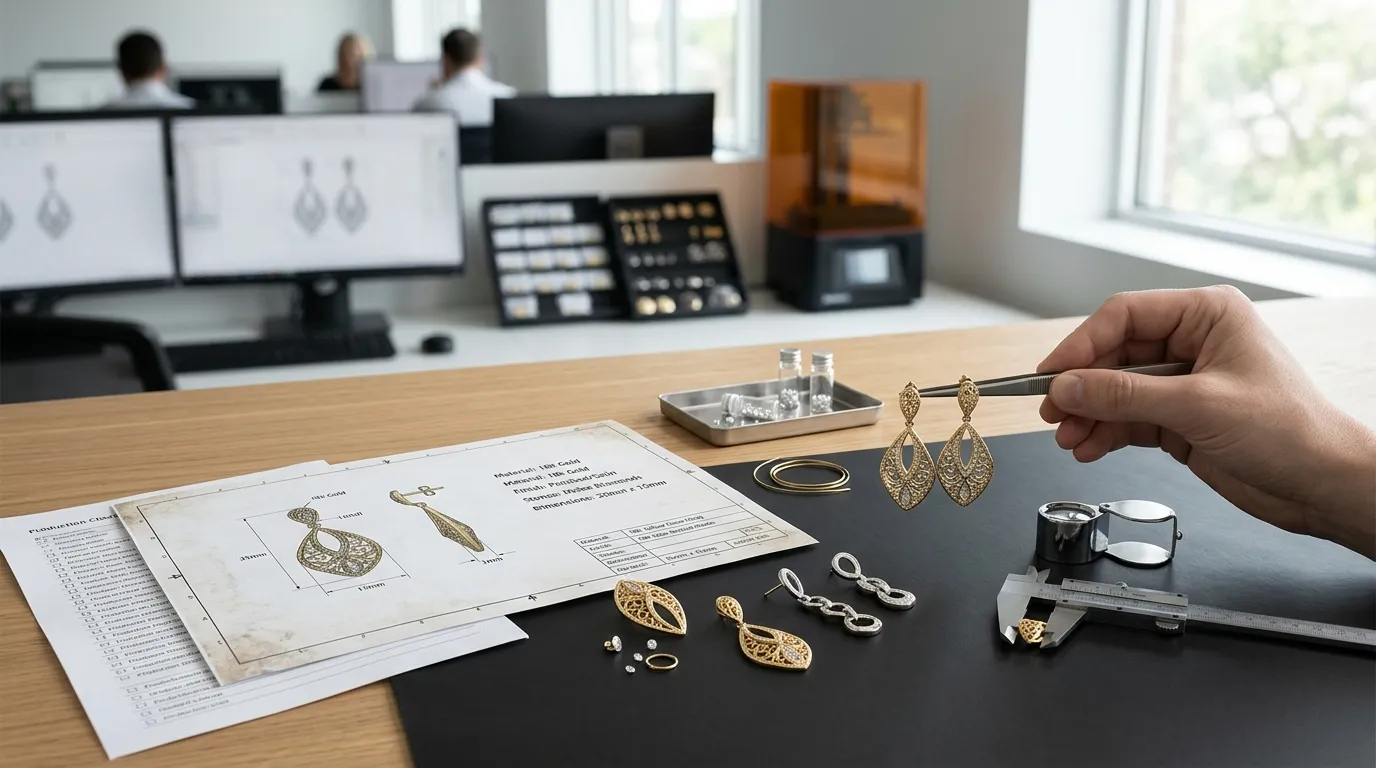
Sending a jewelry design to a manufacturer is not simply a matter of attaching a product image and asking for a price.
A photo can show what you want the jewelry to look like, but it may not explain the material, dimensions, construction, plating, stone setting, finish, or quality expectations required to manufacture it consistently.
If you want accurate communication with your jewelry manufacturer, your goal should be to turn your design idea into a clear production brief.
At SSJew, we review design references, materials, dimensions, finishing expectations, and other production requirements before moving into CAD and sampling. Clear information at this stage helps us identify manufacturing questions before they become production problems.
Start With the Product Goal
Before discussing technical specifications, tell us what you are trying to create.
For example, you may be developing:
-
A new jewelry collection for your brand
-
A private label product
-
A seasonal e-commerce collection
-
A wholesale jewelry line
-
A premium silver or gold product
-
A cost-sensitive fashion jewelry range
You do not need to provide a complete manufacturing solution yourself.
However, it helps us understand which parts of the design are commercially important to you.
For example, if the priority is a lightweight necklace at a specific target price, we may need to consider structure and material usage differently than we would for a heavier premium necklace.
Your design brief should therefore identify:
-
Target product type
-
Intended market or collection
-
Target material
-
Target quantity, if known
-
Target price or cost direction, if available
-
Important visual features
-
Any requirements that cannot be changed
This gives the manufacturer context before technical decisions are made.
Send the Right Design References
The more clearly you can communicate the design, the fewer assumptions we need to make.
Useful references may include:
-
Sketches
-
Product photographs
-
CAD files
-
Technical drawings
-
Reference products
-
Dimensions
-
Material references
-
Finish references
-
Stone specifications
-
Logo artwork
A product photograph is useful for communicating appearance, but it rarely defines every manufacturing requirement.
A CAD file can communicate shape and structure more precisely, but it may still leave questions about material, plating, surface finish, tolerances, or production requirements.
If you already have a CAD file, send it. If you only have a sketch or reference image, send that instead.
At SSJew, we can use design references as the starting point for CAD and sampling rather than requiring every technical detail to be solved before the project can begin.
Define the Specifications That Affect Production
Your manufacturer needs to know which product characteristics are fixed.
1. Material
State the intended material as clearly as possible.
For example:
-
925 sterling silver
-
Brass
-
Gold
-
Stainless steel
-
Other specified materials
If the exact alloy or material specification is important to your market, compliance requirements, or product positioning, include it in the brief.
Material affects more than appearance. It can influence weight, manufacturing processes, finishing options, cost, and future repeat orders.
Our materials and finishes workflow is designed around making these decisions before sampling and bulk production rather than leaving them open until later.
2. Dimensions and Weight
Provide the dimensions that matter to your product.
Depending on the jewelry type, this may include:
-
Ring size
-
Chain length
-
Pendant dimensions
-
Bracelet length
-
Thickness
-
Stone dimensions
-
Component size
-
Target weight
If a dimension has an acceptable tolerance, communicate that as well.
For example, “approximately 20 mm” and “20 mm ± 0.2 mm” are different production requirements.
You do not necessarily need to define every tolerance yourself. If you are unsure, identify the dimension as important and ask us to review the manufacturing feasibility.
3. Construction
Explain how the jewelry should function, especially where the structure is important.
Examples include:
-
Hinges
-
Clasps
-
Links
-
Prongs
-
Soldered connections
-
Moving components
-
Threaded components
-
Interlocking parts
A design may look correct in a drawing but require structural adjustments before it can be produced reliably.
This is where manufacturer feedback becomes valuable.
Be Specific About Finish and Plating
Terms such as “gold finish,” “silver color,” “matte,” or “shiny” may not be sufficient for production.
If appearance is commercially important to your collection, provide a visual reference and define the finish direction.
You may need to communicate:
-
Plating color
-
Karat or plating type
-
Surface finish
-
Polished or matte appearance
-
Brushed or textured surface
-
Color reference
-
Plating thickness, when required
-
Anti-tarnish requirements, when applicable
At SSJew, we recommend using visible references for tone and surface finish before production. One approved reference can then help connect sampling, bulk production, and future reorders.
This is particularly important when your collection contains multiple gold-tone products. A color that looks acceptable on a screen may not provide enough information for consistent production.
Communicate Stone and Component Requirements
If your jewelry includes stones, do not communicate only the general stone name.
Where relevant, specify:
-
Stone type
-
Shape
-
Size
-
Color
-
Grade or quality requirement
-
Quantity
-
Setting method
For example, “CZ stones” does not fully describe the requirement if the size, shape, color, and setting position affect the final product.
The same principle applies to components.
If your design uses chains, clasps, posts, backs, connectors, or other purchased components, identify the required specifications whenever they affect appearance, function, or quality.
Tell Us What Is Fixed and What Can Be Optimized
One of the most useful things you can communicate to a manufacturer is the difference between non-negotiable requirements and areas open to technical optimization.
For example:
Fixed:
-
Logo position
-
Overall dimensions
-
Stone shape
-
Brand finish
-
Ring size
-
Required material
Open to discussion:
-
Internal structure
-
Manufacturing method
-
Component construction
-
Certain thicknesses
-
Production process
-
Tooling approach
This distinction makes communication much more efficient.
You do not need to tell us exactly how to cast, stamp, CNC machine, polish, or assemble every component. Instead, tell us what result you need and which characteristics must remain unchanged.
We can then review the manufacturing route and identify where technical adjustments may be appropriate.
Use Sampling to Resolve Unclear Requirements
A sample should do more than confirm whether you like the product.
It should help you verify whether the design has been translated correctly into a physical product.
During sampling, review:
-
Overall dimensions
-
Weight
-
Proportion
-
Surface finish
-
Color
-
Stone placement
-
Setting
-
Logo position
-
Construction
-
Functional components
If something is wrong, record the revision clearly.
For example, instead of saying “make the ring stronger,” specify which area needs to change and, if possible, provide a marked image or drawing.
At SSJew, CAD and sampling are part of the process used to move a design toward production readiness before bulk manufacturing.
Make the Approved Sample Your Production Reference
Once you approve a sample, do not allow the approved standard to exist only in email conversations.
Keep the approved sample connected to the relevant production information.
Your production reference may include:
Approved Sample + CAD + Material + Dimensions + Weight + Finish + Plating + Stones + Components + QC Requirements
This becomes especially important when you reorder the same SKU.
At SSJew, our QC process uses the approved sample as a reference when checking bulk output, including appearance, dimensions, finishing, plating, workmanship, and stone setting.
The purpose is not simply to inspect the final product. It is to keep the original approval standard connected to production.
Common Communication Mistakes
Sending only a product image
A photo communicates appearance but leaves important production questions unanswered.
Using vague finish descriptions
“Gold plated” or “matte finish” may not define the exact production expectation.
Changing requirements after sampling
Late changes can affect CAD, tooling, material usage, finishing, cost, and production timing.
Giving conflicting references
If the CAD says one dimension but the marked image says another, tell us which reference takes priority.
Approving the sample without documenting revisions
If changes are discussed but not recorded, the production team may not have a clear final reference.
Assuming the manufacturer knows every preference
A manufacturer can identify technical issues, but your commercial and visual priorities still need to be communicated clearly.
A Practical Jewelry Design Requirement Checklist
Before sending your design to a jewelry manufacturer, check whether you have provided:
Requirement
What to Communicate
Product
Jewelry type and SKU/reference
Design
Sketch, photo, CAD or technical drawing
Material
Base metal and material requirements
Dimensions
Size, thickness, length and critical measurements
Weight
Target or acceptable range, if important
Construction
Structural and functional requirements
Finish
Polished, matte, brushed, textured, etc.
Plating
Color, type and thickness where required
Stones
Type, size, color, quantity and setting
Components
Clasps, chains, posts and other parts
Branding
Logo position and application
Packaging
Required packaging or labeling
Quality
Critical inspection requirements
Sample
Approval standard and revision notes
You do not need to solve every manufacturing detail before contacting us. The purpose of this checklist is to make the important requirements visible so we can review the project with you.