
Jewelry Quote Comparison Checklist for Brands
Jewelry Quote Comparison Checklist for Brands
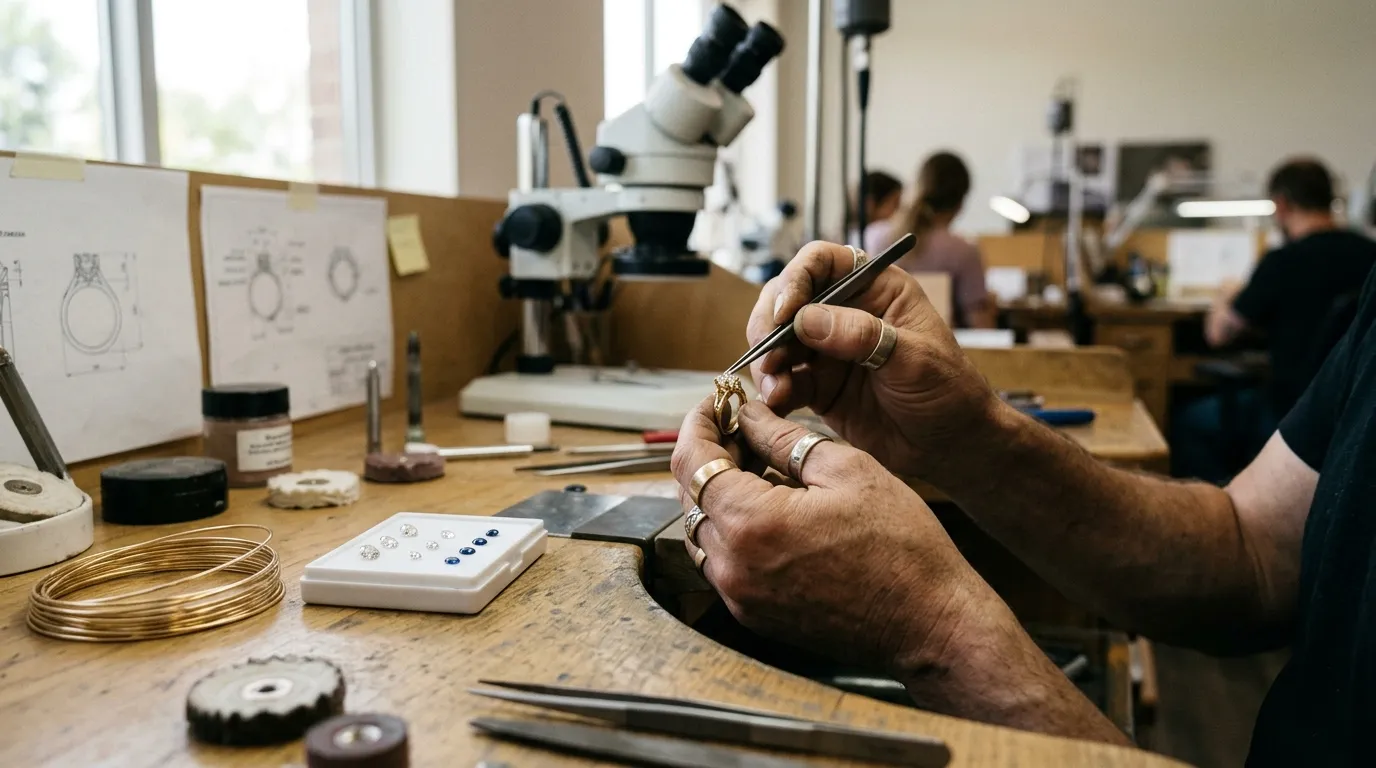
If you are sourcing custom jewelry from several manufacturers, you may receive three very different quotations for what appears to be the same product.
One factory may quote US$4.20 per piece, another US$3.80, and another US$3.40.
The lowest number may look attractive, but you cannot know which quotation is actually more competitive until you compare what each supplier has included.
For you as a jewelry buyer, the better question is not:
“Which manufacturer has the lowest price?”
It is:
“Are these three quotations based on the same manufacturing specification and commercial scope?”
At our SSJew, we approach quotations from the manufacturing side. We review the design, material, manufacturing route, finishing requirements and quantity before treating a unit price as meaningful.
What Should a Jewelry Manufacturer Quote Include?
Product Specification
Your quotation should identify the product being priced.
At minimum, you should confirm:
-
Product type
-
Dimensions
-
Target weight
-
Material
-
Stone specifications
-
Plating or surface finish
-
Logo or engraving
-
Quantity
-
Packaging requirements
A reference image alone is often not enough for a production quotation. A recent B2B jewelry manufacturing guide recommends providing design files, dimensions, material, finish, quantity, packaging and target timing so the manufacturer can assess feasibility and cost more accurately.
If one factory receives a detailed CAD file while another only receives a product image, their quotations are not necessarily comparable.
Material and Weight
Material cost can change significantly with the metal and finished weight.
You should confirm whether the quotation is based on:
Estimated weight or actual sample weight?
For sterling silver, brass and gold jewelry, the metal value is directly connected to the amount and type of material used.
Our SSJew quotation process should therefore connect the design and manufacturing specification with the expected material requirement.
-
Average Material Cost Percentage
-
925 Sterling Silver: 40–60%
-
Brass: 20–40%
-
Gold: 70–90%
-
-
Average Weight Deviation: ≤3%
H3: Plating and Finishing
“Gold plated” is not a complete manufacturing specification.
You should compare:
-
Gold karat
-
Plating color
-
Plating thickness
-
Surface preparation
-
Barrier layer where applicable
-
Polishing
-
PVD or electroplating
-
Final finish
A current 2026 OEM manufacturing reference separates plating cost by tone, layers and coating thickness rather than treating all gold finishes as the same cost.
If Factory A quotes 1.0 μm gold plating and Factory B quotes an unspecified gold finish, the two prices should not be treated as equivalent.
How Should You Compare Jewelry Manufacturer Quotes?
Compare the Same Quantity
Quantity affects more than the unit price.
It can change:
-
Material purchasing
-
Tooling allocation
-
Production setup
-
Labor efficiency
-
Packaging
-
QC
-
Shipping
For example, if a US$500 tooling cost is allocated across 100 pieces, it represents US$5 per piece.
Across 1,000 pieces, the same tooling represents only US$0.50 per piece.
This is why you should compare both:
First-Order Cost
and
Repeat-Order Cost
rather than looking only at the initial unit price.
Compare MOQ by Style, Color and Size
Do not assume that “MOQ 500 pieces” means you can order any combination of 500 pieces.
You should ask:
Is the MOQ calculated per order, per design, per color, per size, or per plating finish?
A 2026 jewelry manufacturing reference gives examples of process-based planning ranges such as 100+ pieces for cutting, 200–300 pieces for some casting projects and 600+ pieces for certain hydraulic-press designs. These are supplier-specific planning references, not universal jewelry-industry standards.
For your collection, the commercial difference can be substantial.
For example:
500 pcs total
is very different from:
500 pcs × 3 plating colors = 1,500 pcs.
You should therefore record the MOQ basis in your quotation comparison sheet.
Separate One-Time and Recurring Costs
Your quotation should distinguish between costs that happen once and costs that repeat with production.
One-time development costs may include:
-
CAD
-
Prototype
-
Mold
-
Tooling
-
Initial sample development
Recurring production costs may include:
-
Metal
-
Components
-
Stone setting
-
Labor
-
Plating
-
Finishing
-
Packaging
-
Inspection
This distinction becomes particularly important when you plan to reorder the same design.
-
Average CAD Development Fee: USD 30–80/design
-
Average Tooling / Mold Fee: USD 50–200/design
-
Average Sample Development Fee: USD 30–100/piece
-
Bulk Order Fee Deduction: Available — development fees may be credited toward qualifying bulk orders, subject to project terms.
What Hidden Costs Should You Check?
CAD, Sample and Tooling
Before approving a quotation, ask whether CAD, tooling and sampling are included.
Public 2026 B2B references show that custom tooling can range from relatively small casting molds to US$600–2,500+ for certain die-casting tooling, depending heavily on the manufacturing route.
The exact number is less important than knowing:
Is this cost included, excluded, or charged separately?
You should also confirm:
-
Number of included CAD revisions
-
Sample fee
-
Mold fee
-
Tooling ownership
-
Tooling reuse for reorders
-
Whether sample fees are deductible from bulk production
Never assume a development fee will automatically be credited against your first bulk order. That should be confirmed in writing.
H3: Packaging and Branding
Your finished procurement cost may include more than the jewelry itself.
Confirm whether the quotation includes:
-
Jewelry boxes
-
Pouches
-
Cards
-
Labels
-
Barcodes
-
Logo engraving
-
Custom packaging
-
Individual packing
If you are building a private label collection, packaging can become a separate MOQ and cost factor.
A useful quotation should make those assumptions visible before you approve the order.
H3: Shipping and Commercial Terms
Two suppliers can quote the same unit price but provide very different commercial terms.
You should confirm:
-
EXW / FOB / other agreed Incoterm
-
Shipping cost
-
Destination
-
Customs responsibility
-
Payment terms
-
Production lead time
-
Shipping lead time
Do not compare an ex-factory quotation directly with a delivered quotation.
How Can You Evaluate Manufacturing Risk?
Check Sample-to-Bulk Consistency
A sample proves what the manufacturer can produce once.
Your bulk order tests whether the manufacturer can reproduce it consistently.
You should compare the approved sample against bulk production for:
-
Dimensions
-
Weight
-
Material
-
Stone placement
-
Surface finish
-
Plating color
-
Logo position
-
Assembly
At our SSJew, we connect CAD, sampling, material control, finishing and final inspection to help move a design from development into repeatable production. Our current manufacturing information states 200+ active craftsmen and 500,000+ pieces of monthly production capacity.
-
Sample First-Pass Approval Rate: ≥80%
-
Sample-to-Bulk Deviation Rate: ≤1%
-
Rework Rate: ≤2%
-
QC Inspection Rate: 100%
Check QC Before Comparing Price
You should ask what happens before the finished jewelry is released for shipment.
Relevant inspection points can include:
Material → Workmanship → Stone Setting → Plating → Surface Finish → Final Appearance
Our SSJew manufacturing information specifically describes inspection across materials, plating, workmanship and stone setting as part of the sample-to-bulk quality process.
-
QC Inspection Items: Material, Dimensions, Weight, Appearance, Plating, Stone Setting, Function, Packaging
-
AQL Standard: ISO 2859-1 / ANSI/ASQ Z1.4
-
Final Inspection Rate: 100%
-
Defect Rate: ≤2%
How Should You Choose a Long-Term Jewelry Manufacturer?
Compare Repeatability, Not Just the First Quote
Your first order is only one purchasing decision.
If you plan to reorder, you need to know whether your manufacturer can reproduce the approved product without repeatedly redefining the specification.
Your long-term reference should include:
CAD → Approved Sample → Material → Weight → Finish → Plating → Stone Setting → Packaging → QC
A recent B2B sourcing guide similarly recommends keeping the approved sample and production specifications connected so future batches can be compared against the original approval.
At our SSJew, the purpose of the sampling and inspection process is not simply to produce one acceptable piece. It is to establish a reference that can support repeat production.
-
Repeat Order Rate: ≥60%
-
Average Repeat Order Cycle: 3–6 months
-
Sample-to-Reorder Deviation Rate: ≤1%
Use a Standard Quote Comparison Checklist
Before you choose a supplier, compare every quotation using the same structure:
Category
What You Should Confirm
Product
Dimensions, weight, construction
Material
Metal type and specification
Stones
Type, size, quantity and setting
Finish
Plating, thickness and surface
CAD
Included or separate
Sample
Cost, quantity and revisions
Tooling
Cost, ownership and reuse
MOQ
Per order, style, color or size
Production
Lead time and process
QC
Inspection scope and standard
Packaging
Included or separate
Shipping
Incoterm, freight and responsibility
Payment
Deposit and balance terms
Once all suppliers are quoted against the same checklist, the comparison becomes much more useful.
Jewelry Quote Comparison Checklist for Brands
Before making your final supplier decision, ask:
☐ Are all manufacturers quoting the same material?
☐ Is the target weight the same?
☐ Are plating color and thickness specified?
☐ Are stones and components included?
☐ Is CAD included?
☐ Is tooling included or separate?
☐ Is the sample fee included or refundable?
☐ Is MOQ calculated per order, style, color or size?
☐ Are packaging and branding costs included?
☐ Is QC clearly defined?
☐ Is the production lead time realistic for your quantity?
☐ Are shipping terms comparable?
☐ Can the approved sample be used as the repeat-production reference?
The goal is not to identify the quotation with the smallest number.
The goal is to identify what the number actually represents.
At our SSJew, we approach custom jewelry manufacturing from the production side: design feasibility, CAD, sampling, material control, finishing, inspection and bulk production need to work together.
For you, that means a useful quotation should give you more than a unit price. It should give you enough information to understand the manufacturing scope, identify procurement risks and decide whether the supplier can support your product beyond the first order.
A comparable jewelry quote is not simply a lower price. It is a clearly defined production scope that you can approve, manufacture and reorder.