Why Jewelry Pieces Crack During Production
Why Jewelry Pieces Crack During Production
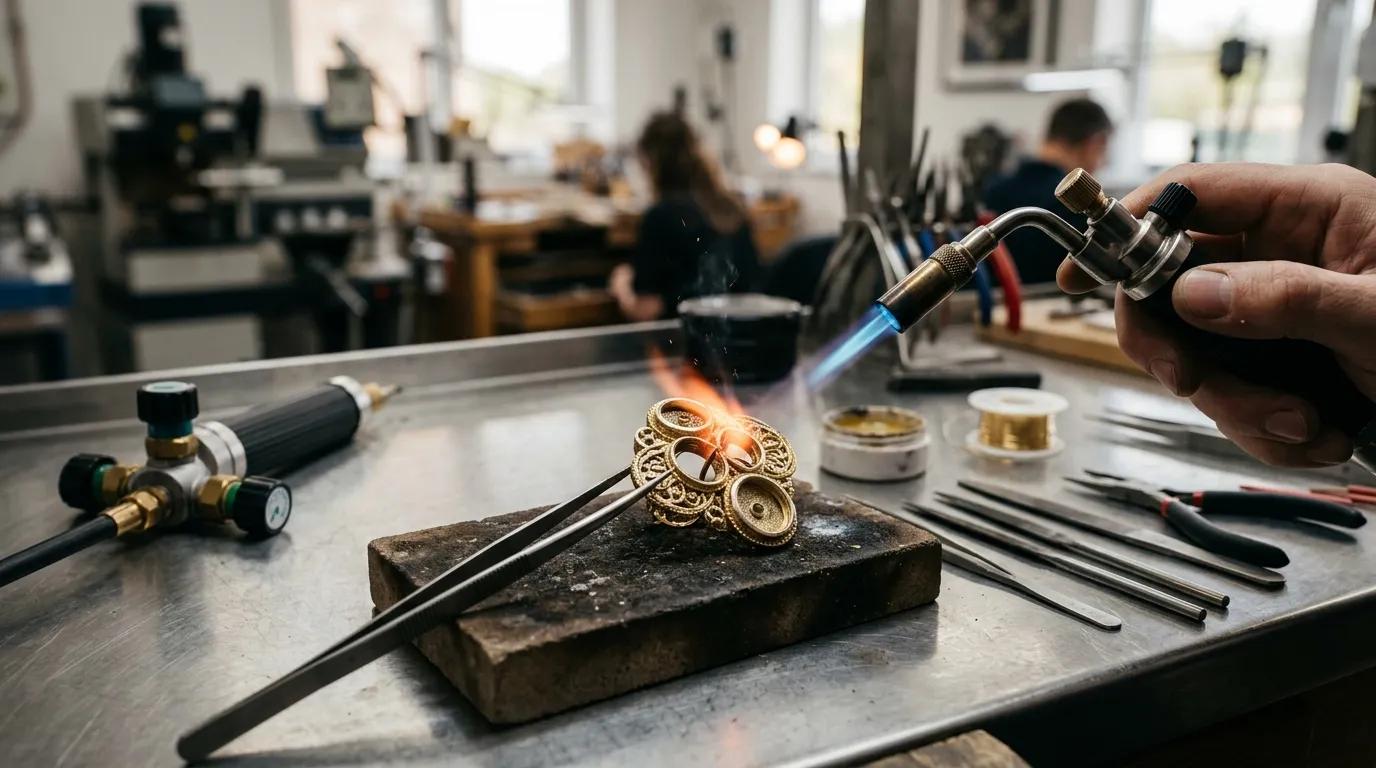
Jewelry cracks during production when metal or a joined section cannot withstand the stresses created by casting, forming, machining, soldering, stone setting, or finishing. A crack may result from a material issue, an unsuitable design, incorrect process conditions, or a combination of factors. Its appearance alone rarely reveals the full cause.
For your jewelry brand, cracking can mean rejected samples, wasted materials, production delays, and inconsistent quality across an order. The most effective response is to identify where the crack started, when it appeared, and what changed during production. Repairing the visible area without understanding the cause may allow the same defect to return in the next batch.
At SSJew, we approach custom jewelry manufacturing as a combination of design, material selection, process planning, and quality inspection. Understanding how these factors interact helps you discuss production risks with your manufacturing partner before approving bulk production.
When and Where Do Jewelry Cracks Develop?
The production stage provides an important clue. Different stages expose jewelry to different stresses, so the investigation should begin with the crack's location and timing.
-
During casting: Cracks may develop because of solidification problems, unsuitable casting conditions, material characteristics, or stress concentrated in a particular section.
-
During stamping or forming: Bending, drawing, or repeated deformation can expose weaknesses in the material or design. Previously work-hardened metal may be less able to withstand further deformation.
-
During soldering or other joining operations: Local heating and cooling can create stress, while an unsuitable joint design or poor joint preparation can weaken the connection.
-
During stone setting: Pressure applied to prongs, bezels, or other settings can cause cracking when the surrounding metal is too thin, poorly supported, or insufficiently ductile.
-
During polishing and finishing: Aggressive material removal may expose an existing defect or leave a section too thin. Cracks can also become more visible after surface material is removed.
Record whether the defect appeared before or after each major operation. If a part passed casting inspection but cracked during stone setting, for example, the investigation should include the setting method, local geometry, and material condition—not just the original casting process.
Common Causes of Cracking in Jewelry Manufacturing
1. Unsuitable Material or Material Condition
Different alloys respond differently to heat, deformation, and mechanical stress. Even when two materials share the same broad category, their composition, processing history, and condition may affect their behavior.
Work hardening is particularly relevant to formed jewelry. As metal is deformed, it can become harder and less ductile. If additional bending or forming exceeds what the material can tolerate, cracking may occur. An appropriate annealing process can restore ductility for some alloys, but the correct procedure depends on the specific material and manufacturing route.
When sourcing sterling silver, brass, or gold jewelry, confirm the specified material and the intended processing method. Do not assume that a material label alone guarantees suitable performance.
2. Design Features That Concentrate Stress
Thin walls, sharp internal corners, abrupt changes in thickness, narrow connectors, and deep cutouts can create areas of concentrated stress. These features may also make casting, forming, polishing, or assembly more difficult.
A design that looks balanced in a CAD model may still contain sections that are difficult to manufacture consistently. A narrow link, for example, may not provide enough material around a hole or connection to tolerate the forces applied during assembly or use.
Before sampling, review the areas most likely to experience stress. Depending on the product, a small geometry adjustment, smoother transition, or revised connection can be more effective than trying to correct the problem after production.
3. Casting and Solidification Problems
Casting-related cracks may be associated with solidification behavior, local thickness changes, restricted contraction, or unsuitable process conditions. The exact cause depends on the alloy, part geometry, and casting method.
Casting defects should not be treated as a single category. A crack, a shrinkage cavity, and gas porosity are different defects, even though they may appear in the same casting. Correct identification matters because each requires a different investigation.
If cracking appears repeatedly in cast components, ask your manufacturing partner to examine the affected location, compare defective and acceptable parts, and review the relevant casting conditions. Avoid assuming that polishing or filling the surface is an adequate correction.
4. Excessive or Repeated Forming
Stamping, bending, and other forming operations place mechanical stress on metal. Tight bends, repeated adjustments, and deformation beyond the material's workable range can increase the risk of cracking.
This risk is not limited to complex jewelry. Thin sheet components, clasps, connectors, and decorative details may also be vulnerable if the geometry and forming sequence are poorly matched.
If cracks appear after stamping or bending, review the material condition, bend radius, tooling, and sequence of operations. Repeatedly forcing a part into shape is not a reliable substitute for correcting the process.
5. Weak or Poorly Designed Joints
Soldered and assembled areas deserve particular attention because the joint may behave differently from the surrounding metal. Insufficient contact, unsuitable joint geometry, contamination, or an inappropriate heating process can contribute to a weak connection. Local heating and cooling may also affect stress and material condition.
A joint that looks acceptable on the surface is not necessarily sound throughout. If the same connection repeatedly cracks, examine the joint design and preparation as well as the joining process.
For custom jewelry, confirm which connections are soldered, mechanically assembled, or formed as part of the original component. This makes it easier to identify critical points during sampling and inspection.
6. Pressure During Stone Setting
Stone setting can place significant local pressure on prongs, bezels, and the surrounding structure. Cracking may occur if a setting is too thin, if the geometry does not provide adequate support, or if the setting method is unsuitable for the material and design.
If a crack appears after setting, check whether it begins near a prong root, a sharp corner, or a narrow section of the setting. The investigation should consider both the metal structure and the setting technique.
Stone security and metal integrity need to be evaluated together. Increasing pressure to secure a stone is not always the correct solution if the underlying structure cannot tolerate that pressure.
How We Can Help Prevent Cracking
Effective prevention begins before production and continues through the operations most likely to introduce stress.
Review the Design Before Sampling
At SSJew, we can discuss your design and intended production route as part of a custom jewelry manufacturing project. CAD review and prototyping can help identify thin sections, difficult connections, sharp transitions, and features that may be challenging to cast, form, polish, or assemble.
Where a risk is identified, discuss whether the geometry or process should change before approving the sample. Any proposed modification should preserve the intended appearance and function as far as practical.
Confirm Material and Process Compatibility
Material selection should match the product's structure and manufacturing route. Confirm the specified alloy, relevant material requirements, and any processing steps needed for forming or joining.
The appropriate process depends on the actual material and design. Do not apply the same heating, forming, or joining assumptions to every silver, brass, and gold item.
Check Critical Operations
Inspection should focus on the areas and stages where cracks are most likely to develop. Depending on the product, this may include cast components before finishing, formed sections after bending, joints after soldering, and settings after stone placement.
Visual inspection can identify visible cracks, but not every internal defect is detectable by looking at the surface. If the risk justifies it, agree on suitable inspection methods and acceptance criteria before production. Do not assume that a particular test is included unless it has been confirmed.
Verify Sample-to-Bulk Consistency
A sample demonstrates how a design can be produced under the conditions used for that sample. It does not automatically prove that every bulk unit will be identical.
Before production, confirm the approved material, critical dimensions, joining details, and relevant processing requirements. For repeat orders, retain an approved reference sample and document important specifications where practical.
If a crack appears during bulk production, ask for the affected quantity, operation, and batch to be identified. A useful corrective-action discussion should explain the likely cause, the action taken, and how the revised process will be checked.
What You Should Check Before Approving Production
Use the following questions when reviewing a sample or discussing a recurring defect with your manufacturer:
Checkpoint
Questions to Ask
Material
Is the material consistent with the agreed specification and intended process?
Design
Are thin walls, sharp corners, narrow connectors, or high-stress areas present?
Process
At which production stage did the crack first appear?
Joint or setting
Does the crack originate near a soldered joint, prong, bezel, or connection?
Inspection
Which critical areas are checked, and what acceptance criteria are used?
Bulk production
How will the approved sample and key specifications be referenced during production?
Corrective action
Has the root cause been investigated, and how will recurrence be checked?
A clear answer should connect the observed defect to a specific investigation and corrective action. General assurances that a product has been “checked carefully” are less useful than a documented explanation of what was checked and what happens if a defect is found.
Can a Cracked Jewelry Piece Be Repaired?
Sometimes, but repairability depends on the material, crack location, depth, design, and intended product requirements. A suitable repair may be possible for certain components, while a crack in a highly stressed joint or a critical stone-setting area may require replacement or redesign.
Polishing alone does not repair a structural crack. Welding, soldering, or other repair methods may also introduce heat or additional stress, so the method must suit the material and component. A repaired piece should be inspected against agreed acceptance criteria before it is approved.
For bulk orders, repair should not automatically replace root-cause analysis. If multiple pieces show the same defect, investigate the process before deciding whether individual repairs are appropriate.
Frequently Asked Questions
Are jewelry cracks always caused by poor manufacturing?
No. Cracking can result from design limitations, material condition, unsuitable processing, or interactions between these factors. A reliable investigation examines the actual defect and production history before assigning a cause.
Can polishing remove jewelry cracks?
Polishing may reduce surface roughness or make a defect less visible, but it does not establish that a crack has been eliminated. Removing material can also reduce the thickness of a component. Structural defects need appropriate assessment and corrective action.
Why does a sample pass inspection but bulk production develop cracks?
Bulk production may involve differences in material batches, tooling conditions, process settings, or assembly conditions. A sample approval is useful only when the critical specifications and production requirements are also communicated and checked during bulk manufacturing.
What should you send a manufacturer when reporting a crack?
Provide clear photographs, the affected product and location, the quantity involved, when the crack was discovered, and whether the pieces had completed setting or finishing. If possible, include the approved sample and relevant order or batch information. This helps narrow the investigation.
Discuss Your Jewelry Manufacturing Requirements with SSJew
If you are developing custom silver, brass, or gold jewelry and are concerned about cracking, the most useful starting point is the design, specified material, manufacturing route, and location of the defect.
At SSJew, we can discuss your product requirements and the manufacturing considerations relevant to your project. Share your drawings or reference images, material specifications, and any known cracking issues so we can review the requirements and identify the points that need clarification before sampling or production.
Contact SSJew to discuss your custom jewelry manufacturing project and the quality requirements your order needs to meet.